Cancun Day Tours
I’m Serious Day Tour Man AI, your day trip expert. Ask me anything — where to go, how to get there, and what’s actually worth your day.
Cancun is a purpose-built beach machine that happens to sit beside one of the world’s great day-trip regions: a wonder-of-the-world pyramid nobody has climbed since 2006, a coastline of sinkhole swimming pools the Maya considered doors to the underworld, and — in season — the largest fish on earth gathering offshore in polka-dotted hundreds. Two things the resort brochures bury are worth knowing up front. The sargassum seaweed question has a season and a map, and the answer is below. And the Riviera’s famous parks and famous ruins both need sorting before any deposit goes down — some are exactly what they promise, some are performances, and the difference is mostly about knowing which one you’re buying.
The distances sort simply: Chichén Itzá is a long day, Tulum and the cenotes are easy ones, and the islands are barely trips at all.
Here’s what’s worth a day, with real times and honest trade-offs.

Popular Day Trips
Chichén Itzá
The Single Ticket, the 8am Gate
Tulum
The Eight A.M. Gate, the Clifftop Ruins
Isla Mujeres
The Half-Hour Ferry, the Golf Cart Vehicle
Valladolid
More Than Forty-Five Minutes, the Cenote in Town
Chichén Itzá — Structured Right
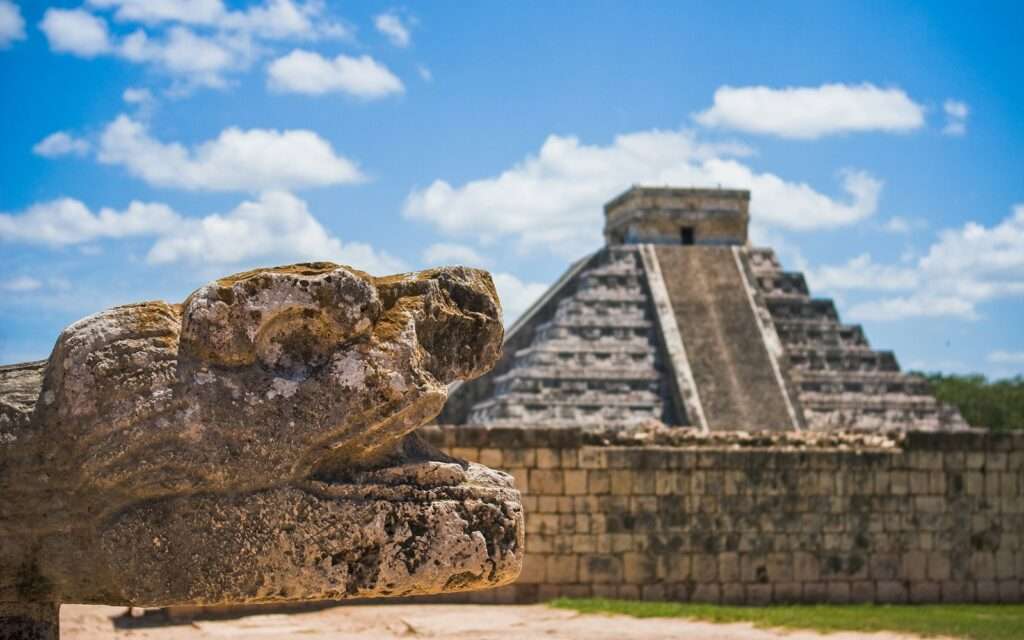
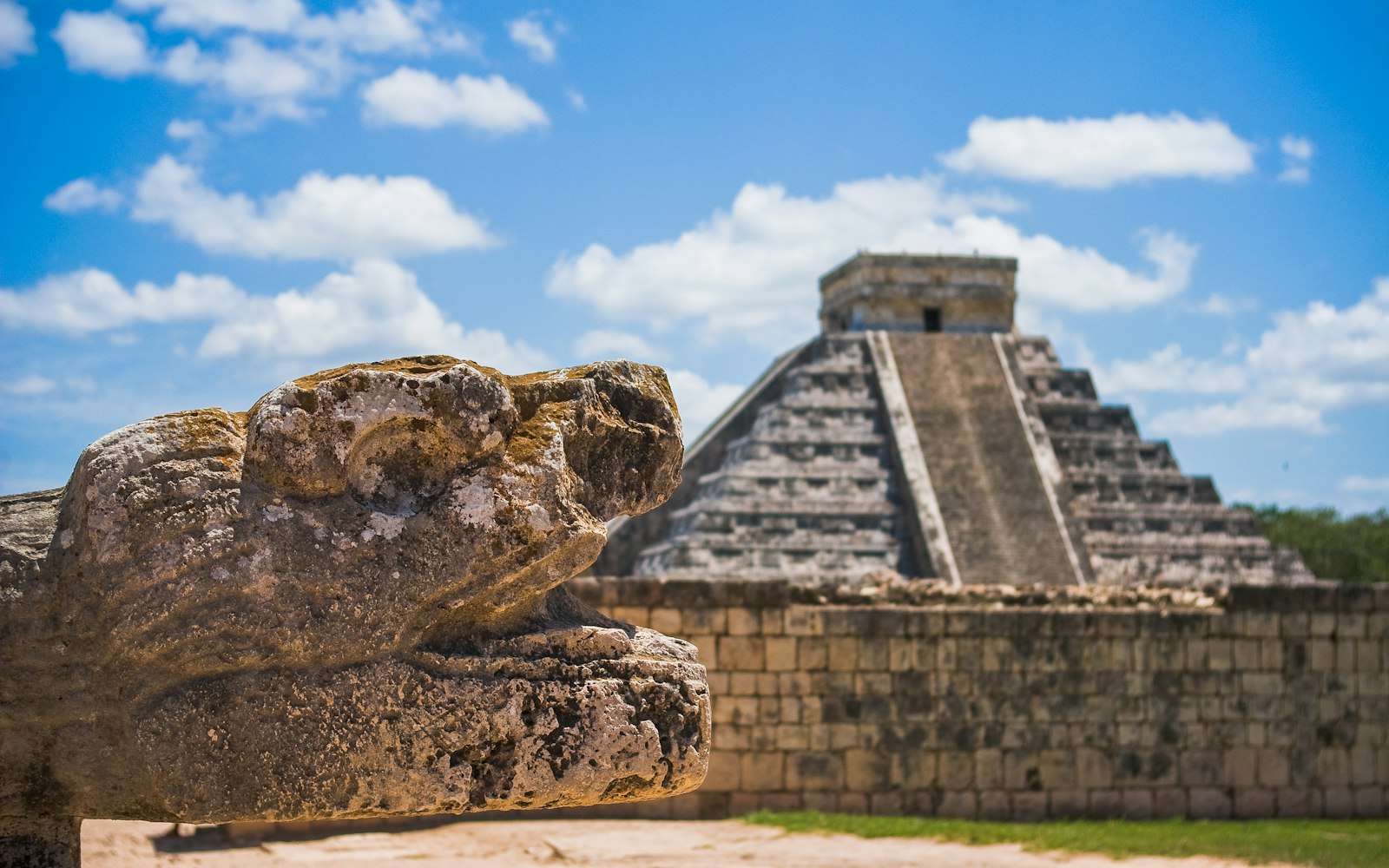
The essential trip: two and a half hours west to the great Maya-Toltec city whose Kukulcán pyramid earned the modern-wonder title. The day runs on crowd math. The site opens at 8, the tour-bus wave lands around 10:30, and the vendor stalls — hundreds of them, lining every path, with the jaguar-whistle soundtrack as the site’s modern texture — build with the heat. So the formats sort clearly: a private or early tour that has you at the pyramid by 8:15, or an overnight in Valladolid, which beats even those.
The rules, kept current: nobody climbs. El Castillo closed to ascents in 2006 and it isn’t coming back. Two spectacles replaced the climb: the equinox serpent-shadow, drawing crowds twice a year, and the guides’ hand-clap demonstration, where the staircase chirps back like a quetzal, running daily.
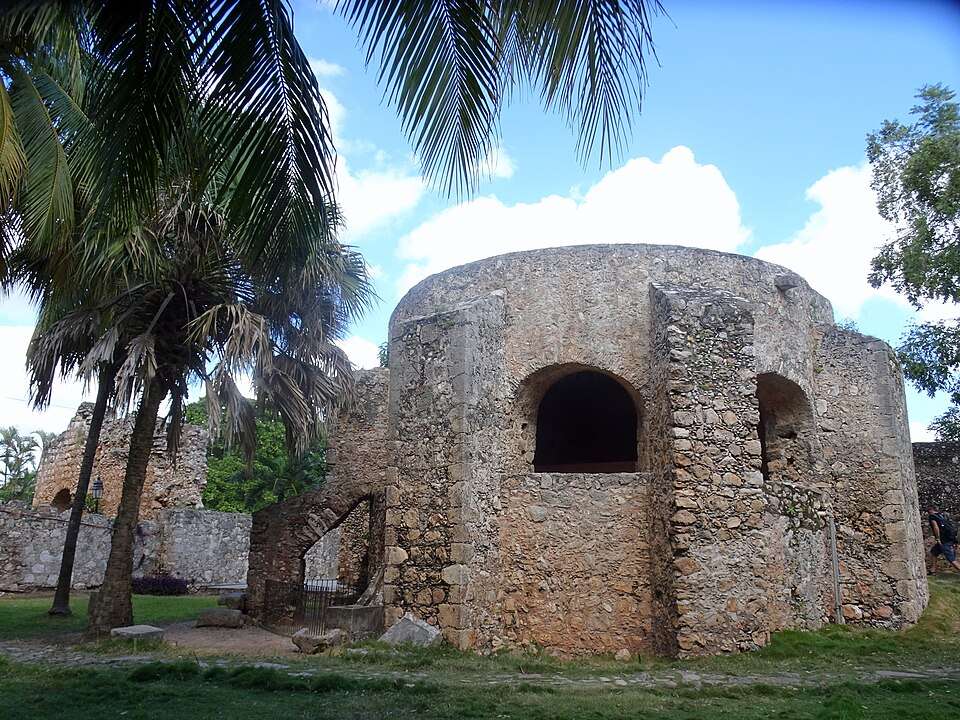
The structure that makes the day: pair the site with Valladolid, the colonial town thirty minutes east — sherbet-colored facades, the Casa de los Venados folk-art collection, and a proper Yucatecan lunch (cochinita pibil is the order) — plus a cenote swim. Ik Kil is the famous, beautiful, thoroughly managed one, priced and crowded by its tour-bus pairing. The Valladolid ring — Oxman, Suytun with its light-beam platform (the photo is real, but staged and queued), Zací in town — sorts by temperament. A full day, twelve hours counted door to door, and the cenote rules below apply.
Read the full Chichén Itzá day-trip page.
Tulum — The Ruins and the Reckoning
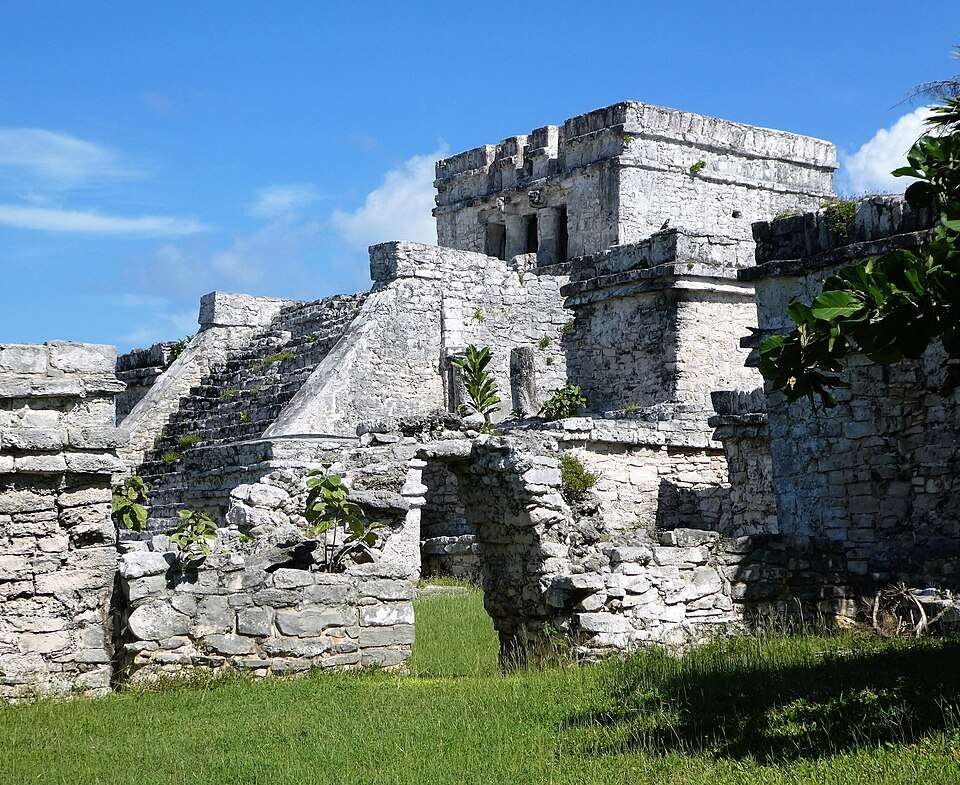
Ninety minutes south, and two subjects wearing one name. The ruins first: the only major Maya city built on the sea, a compact walled site where El Castillo stands on the cliff edge above the turquoise water and the iguanas outnumber the visitors by mid-morning. The math is 90 minutes of site time — it’s small, and the setting is the show — with the beach below (when access is open) as the swim that completes it. Arrive at 8 or accept the heat-and-crowd tax, and move through the parking-lot “guides” gauntlet with polite momentum.
Then the reckoning: Tulum town and its beach strip have transformed in a decade from backpacker secret to a jungle-boho brand running Manhattan prices on generator power. The beach clubs and cenote-adjacent restaurants deliver genuine beauty at genuine cost — day-trippers should pick one club and treat the day-bed minimum as the entry fee. The town still eats well at taco prices, and travelers expecting 2012’s Tulum should recalibrate, or aim for Bacalar on another day. The pairing that works: Gran Cenote or the Dos Ojos system on the way home makes the ruins-plus-cenote day the coast’s best-engineered outing.
Read the full Tulum day-trip page.
The Islands — Isla Mujeres & Cozumel
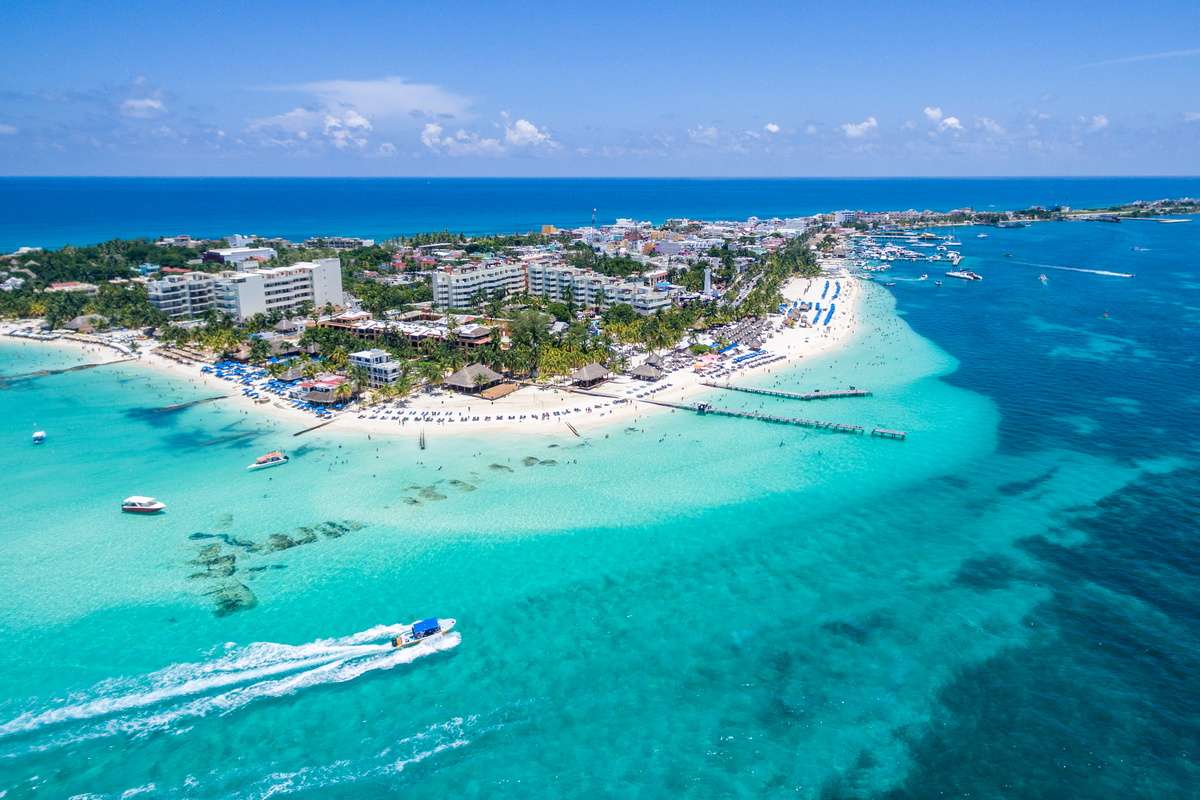
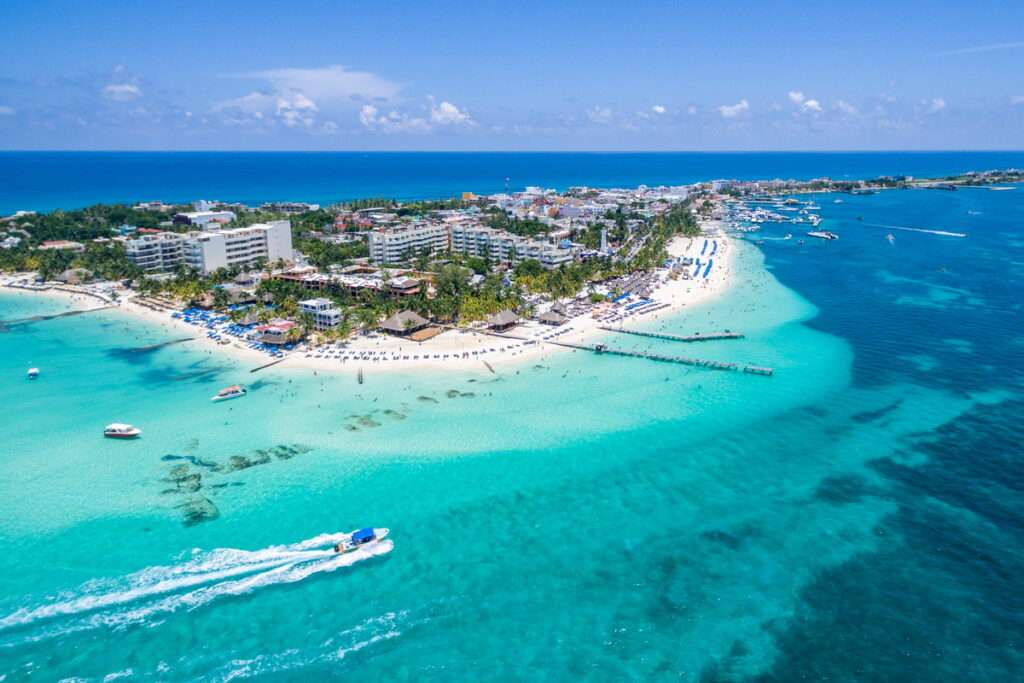
Two ferries, two temperaments. Isla Mujeres, twenty minutes from Puerto Juárez or the Hotel Zone piers, is the easy essential. Golf carts are the island vehicle — the rental ritual is half the fun; drive the loop — and Playa Norte is a shallow-water beach with few equals anywhere. Its north-facing orientation shelters it from sargassum when mainland beaches brown, a fact worth the ferry alone in seaweed season. Punta Sur’s cliff sculpture park caps the island’s tip, and the MUSA underwater museum serves the snorkel tier offshore. Note that the party catamarans and the independent ferry-plus-cart day are different products at similar prices. The cart day wins for anyone past the open-bar phase.
Cozumel, via the Playa del Carmen ferry, is the diving island: the Palancar and Colombia reef systems are the Caribbean’s best accessible wall diving, and the snorkel tours serve non-divers well at El Cielito’s starfish shallows. But the math is real — from Cancun it’s a long day of stacked transfers and ferries, best taken by divers with purpose. Beach-day seekers should take Isla Mujeres and keep the hours. Cruise-ship days are Cozumel’s wild card: check the port schedule before committing.
Read the full Isla Mujeres day-trip page.
The Cenotes — Rules First, Then the Magic
The region’s singular gift, and the rules are the point. The Yucatán’s cenotes — thousands of limestone sinkholes opening into the world’s longest underwater cave systems, sacred wells to the Maya — welcome swimmers under a code: no sunscreen of any kind, not even reef-safe, because the closed systems tolerate nothing (the mandatory pre-swim shower is enforcement, not suggestion); no touching formations; life jackets where posted. And one rule about credentials: cave-diving certification is a real qualification. Snorkelers stay in the light zones — the full cave systems kill the untrained every year.
The circuit, sorted: Dos Ojos, the twin-eye caverns, offers the best beginner cave-snorkel experience on the coast through light-shafted chambers. Gran Cenote adds turtles and easy access. Cenote Azul is the open-air family tier, and the Puerto Morelos Ruta de los Cenotes strings a jungle ring for the tour-format day. The practical wisdom: one great cenote beats four sampled — the entry fees stack — morning light makes the famous shafts, and the “private cenote” tour tier mostly buys earlier access to the same water. That’s worth paying for precisely when it promises the hour, not the exclusivity.
Whale Sharks & Sian Ka’an — The Wildlife Tier
The seasonal headliner: June through mid-September, whale sharks — the largest fish on earth, spotted, placid, plankton-vacuuming — aggregate in feeding hundreds off Isla Mujeres and Holbox. The swim-with tours run under rules that guarantee the experience rather than limit it: small groups, two people in the water at a time with a guide, no touching (the animals set the encounter), and no sunscreen or biodegradable-only at the strictest operators. Set expectations: the boat ride out runs long and lumpy — medicate preemptively — sightings are near-guaranteed in peak July and August and merely likely at the season’s edges, and an operator’s rules-compliance reputation is the booking criterion that matters.
The southern counterpart is Sian Ka’an, the biosphere reserve below Tulum — a UNESCO wetland of lagoons and mangrove channels. Its signature is the ancient-canal float: drifting a Maya-dug channel in a life vest. The Punta Allen boats add dolphins and turtles. The washboard road in is part of the price, and the small-group format is the only one the reserve should host. Both are the coast’s conscience-clear wildlife days.
The Hotel Zone, the Sargassum Question & Cancun Itself
Seaweed first, because every visitor asks. Sargassum — the brown seaweed that arrives in mats — is seasonal (roughly April through August at its worst, variable by year and by week), directional (east-facing mainland beaches catch it; the north-facing stretch of the Hotel Zone’s top arm and Isla Mujeres’ Playa Norte shelter from it), and tracked (daily sargassum maps and webcams are the honest pre-trip and pre-morning check). The resorts rake at dawn, the bad weeks are severe, and the winter visitor largely never learns the word.
The zone itself: the Hotel Zone is a purpose-built resort strip that delivers exactly what it promises — the beach, the pool tier, the nightlife blocks. Downtown Cancun, El Centro, is where the actual city eats: the Parque de las Palapas evening food stalls, Mercado 28’s haggled stalls, and a taco economy where turnover, not decor, marks the safe stand.
The parks question: Xcaret and its siblings (Xel-Há, Xplor) are polished, expensive, all-inclusive eco-theme-parks. For families wanting one organized everything-day, they deliver genuine value — Xcaret’s evening Mexico Espectacular show is legitimately spectacular. For travelers who’d rather have the cenote and the ruins à la carte, they feel like a cruise ship on land. Know your temperament and book accordingly. On safety, stated evenly: the resort corridor’s issues are pickpocket-and-scam tier, not the headlines’ tier — standard city awareness applies downtown, and the taxi-versus-rideshare friction is real. Season math: December through April is the dry, sargassum-light glory window at peak prices; May and November are the shoulder plays; and hurricane season (June through November, peaking September) is the insurance-and-flexibility season the deals price in. Cancun works best as a base camp — the beach machine funds the infrastructure, and the Yucatán does the rest.
Full day-trip pages: Valladolid.
Frequently Asked Questions
Can you climb Chichén Itzá?
No — El Castillo closed to climbing in 2006, permanently. Arrive at the 8 a.m. opening to beat the 10:30 bus wave, and pair the site with Valladolid and a cenote for the right full day.
When is sargassum season in Cancun?
Roughly April through August at its variable worst — check the daily maps, and know that north-facing beaches (the Hotel Zone’s top arm, Isla Mujeres’ Playa Norte) shelter from it. Winter visitors rarely see it.
What are the cenote rules?
No sunscreen of any kind, mandatory pre-swim showers, no touching formations, and light zones only for snorkelers — the closed systems tolerate nothing, and the rules are the reason the water stays sacred-clear.
When can you swim with whale sharks?
June through mid-September, peaking July–August, off Isla Mujeres and Holbox — small groups, two at a time, no touching, and a long lumpy boat ride. Book operators by their rules-compliance reputation.
Is Xcaret worth it?
For families wanting one organized everything-day, yes — the evening show alone impresses. Travelers who prefer the cenote and the ruins à la carte should spend the same money on two real days instead.