Isla Mujeres from Cancún: The Half-Hour Ferry, the Golf Cart Vehicle, and a Beach Worth Its Ranking
Twenty minutes across the water, the island runs seven kilometers end to end — the golf cart is the vehicle, Playa Norte is a beach whose world ranking holds up in the water, and the day-boat crowds keep a schedule you can beat.
The short version
- Ultramar ferries cross Puerto Juárez to the island every half hour in about twenty minutes at real-but-reasonable round-trip fares — ultramarferry.com — with the hotel-zone departures running the same water at resort markup.
- The golf cart per the alarm is the island’s vehicle: seven kilometers end to end, cart rentals clustered at the ferry dock renting by the hour and day — early arrival beats the queue, deposits and fuel-level photos are the standard hygiene.
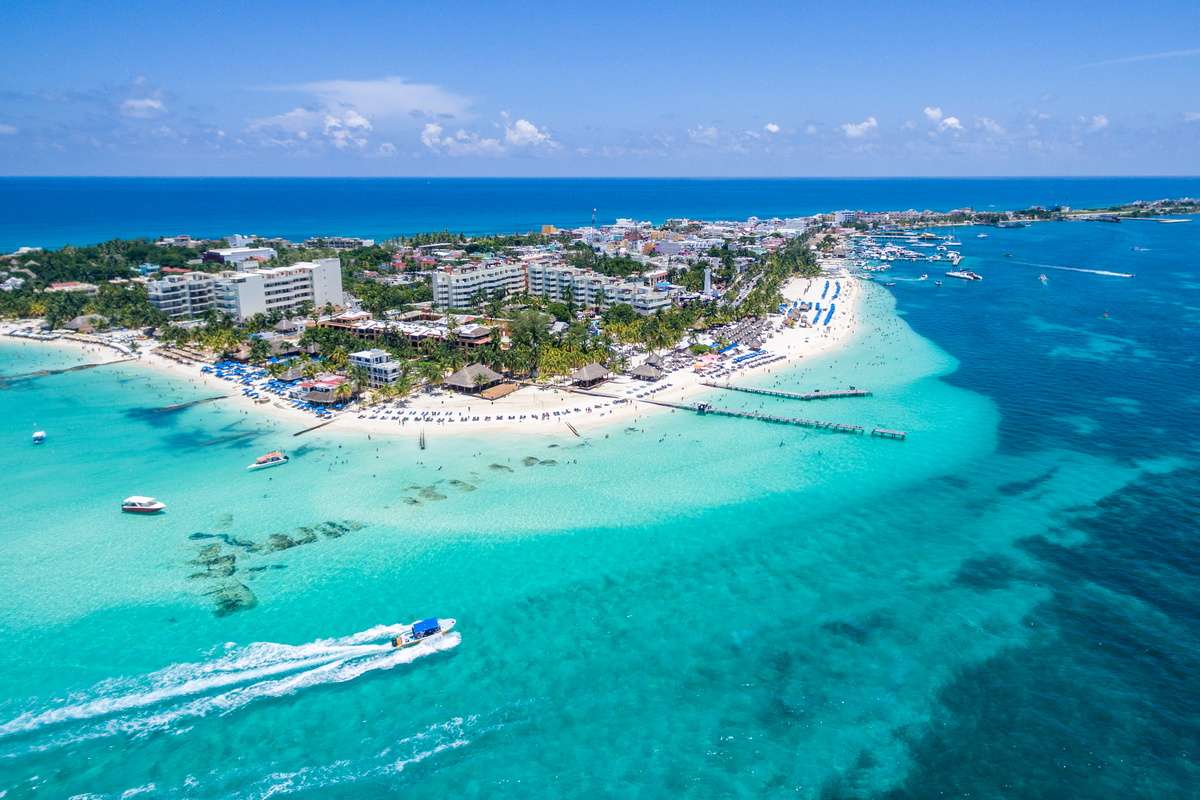
- Playa Norte holds the alarm’s defensible ranking on physical evidence: powder sand shelving into waist-deep turquoise calm for a hundred meters out, palm shade at the back, and sunset facing — the rare list-topper that survives arrival.
- Punta Sur at the island’s southern tip runs the cliff sculpture garden, the small Maya temple ruin to Ixchel (the goddess whose name the island carries from the Spanish arrival story), and the eastern cliffs’ surf for a modest entry.
- The seasonal headline: whale-shark snorkel tours run June through September to the aggregation grounds offshore — regulated, licensed-boat, real-money trips booked as their own half day, with the in-water rules (distance, no touching, no flash) enforced by the operators worth choosing.
- The middle island fills the cart loop: the MUSA underwater museum’s snorkel sites off the west coast, the turtle farm’s modest conservation stop, and the malecón’s east-side wave-watching pull-offs; the crowd curve per the alarm — day boats landing eleven to four — is the schedule everything else beats.

Getting there
Puerto Juárez is the honest departure point per the alarm — frequent, cheaper, and quicker to load than the hotel-zone piers; taxis and colectivos reach it from most of Cancún without drama. The ferry’s half-hour cadence makes timing trivial; the cart queue at the far side is the real race, won by the early boats. Day bags travel light: the island runs on sunscreen (reef-safe where you’ll swim), cash for the small stops, and the alarm’s crowd-curve awareness as the only itinerary.
The day
Early-boat version: cart secured by nine, then the loop clockwise — Punta Sur’s cliffs and temple in the morning light, the east coast’s malecón pull-offs, a garrafón-adjacent snorkel or the MUSA panga trip by appetite — landing at Playa Norte as the day boats begin disgorging elsewhere. The beach hours run per the ranking: waist-deep drifting, palm-shade intervals, beach-club fees or free-sand towel strategy by temperament. Lunch is tikin-xic fish at a beach grill or downtown’s taco blocks. The late afternoon takes the island back as the day boats reload at four — the alarm’s stay-late clause — with Playa Norte’s sunset as the closing argument and an evening ferry home. Whale-shark season inverts the structure: the dawn boat, the offshore hours, and the island afternoon as the recovery.
When to go
November through May runs the dry-season table — calm water, full visibility, and the crowd curve as the only management problem. June through September adds the whale sharks per their season (July–August the density peak) at the price of heat and afternoon-storm roulette; September–October run the quiet-and-humid gamble. The alarm’s clock strategy works year-round: the island before eleven and after four is the overnighters’ and the early ferries’, and joining them costs nothing but the alarm it’s named for.
Frequently Asked Questions
Is the golf cart really necessary?
For the full-island day, effectively yes — seven kilometers, real sun, and Punta Sur at the far end make walking a partial visit; taxis exist but the cart is the format and half the fun. Beach-only visitors can skip it and walk from the ferry to Playa Norte in ten minutes.
Is Playa Norte free?
The sand and sea, yes — beach clubs rent loungers and shade with minimum-spend arrangements, and the free-towel stretch runs the western half. The water is identical everywhere on the beach, which is the point of the ranking.
Are the whale-shark tours ethical?
The regulated version — licensed boats, capped swimmer numbers, distance rules, no touching or flash — is the standard worth demanding by name when booking; the aggregation is wild and seasonal, not baited. Choose operators who brief the rules like they mean them, and the encounter is as defensible as wildlife tourism gets.
What is MUSA exactly?
An underwater sculpture museum — hundreds of figures sunk as artificial reef between the island and the mainland, colonized by coral and toured by snorkel and dive boats. Visibility and swell decide the day’s quality; it pairs naturally with the island’s west-coast snorkel stops.
Isla Mujeres or Tulum from Cancún?
Tulum (documented on this network with the eight a.m. gate rule) for ruins-on-a-cliff plus cenotes; Isla for the beach-and-cart island day. Archaeology versus turquoise — and the honest Cancún week does both, on the schedule each page sets.